Most riders don’t think about skateboard bearings until their wheels start sounding gritty or slowing down faster than they used to. But bearings are one of the biggest factors in how fast and smooth a board actually rolls — more than wheel hardness, more than deck weight, and often more than riders expect. This guide covers standard sizing, material choices, and exactly when it’s time to swap them out.
Standard Skateboard Bearing Size
Nearly all skateboard and longboard wheels use the same standard bearing size: 8mm bore, 22mm outer diameter, 7mm width — commonly labeled as a 608 bearing. This is true across almost every skate board bearings brand and price point, which is why bearing sizes skateboard shoppers search for usually come back to this same standard fitment regardless of wheel brand. Manufacturing tolerances for these bearings generally follow standards set by organizations like the American Bearing Manufacturers Association, which is where ABEC ratings and sizing conventions originate.
Steel vs Ceramic Skateboard Bearings
- Steel skateboard bearings are the standard choice — durable, affordable, and perform well for most riders across street, park, and cruising use.
- High end skateboard bearings often use ceramic or hybrid ceramic balls, which spin with less friction and hold speed longer, especially noticeable in longer pushes or downhill riding.
For casual and everyday skating, quality steel bearings are more than enough. For downhill, longboard cruising, or riders chasing every bit of extra speed, ceramic or hybrid ceramic bearings offer a real, noticeable upgrade in how long a push carries you.
Longboard Bearings vs Standard Skateboard Bearings
Longboard bearings use the same standard 608 size as skateboards, but longboard riders tend to prioritize sustained speed and smooth rolling over quick acceleration, which is why ceramic and hybrid ceramic upgrades are especially popular in the longboard community — the benefit compounds over longer distances rather than short bursts of speed.
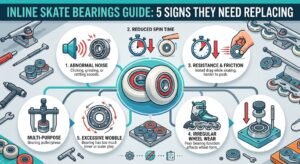
7 Signs Your Skateboard Bearings Need Replacing
- Wheels sound gritty or rough when spun by hand
- Noticeably reduced roll distance compared to a fresh push
- Visible rust on the bearing shield (common after riding in wet conditions)
- The board feels like it requires more effort to maintain speed
- A grinding or clicking noise while riding, especially over cracks or rough pavement
- Wheels that don’t spin evenly or wobble slightly on the axle
- Bearings that feel loose or shift position inside the wheel core
If more than one of these sounds familiar, it’s a strong sign the bearings — not the wheels or bushings — are the actual problem.
How to Maintain Skateboard Bearings
Skate bearings pick up dirt and moisture constantly, especially during street and park riding. Removing and cleaning bearings periodically, then re-lubricating with a light bearing oil, extends their life significantly. Avoid water when cleaning if possible; use a bearing-safe solvent instead, since water left inside a bearing shield often causes rust faster than riding in light rain does. Once a bearing starts making noise even after a full cleaning, it’s usually reached the end of its usable life and is worth replacing rather than continuing to service.
Final Thoughts
Whether you’re running budget steel bearings or upgrading to high end skateboard bearings for maximum speed, matching the correct 608 size and choosing the right material for your riding style makes the biggest difference in how your board performs. If you’re not sure which bearing grade fits your setup, reach out and we’ll help you choose.
Shop Skateboard & Longboard Bearings → [https://rcbearings.com/shop-list-view/]
Questions about fitment? Call (978) 254-3987 — we’re happy to help.