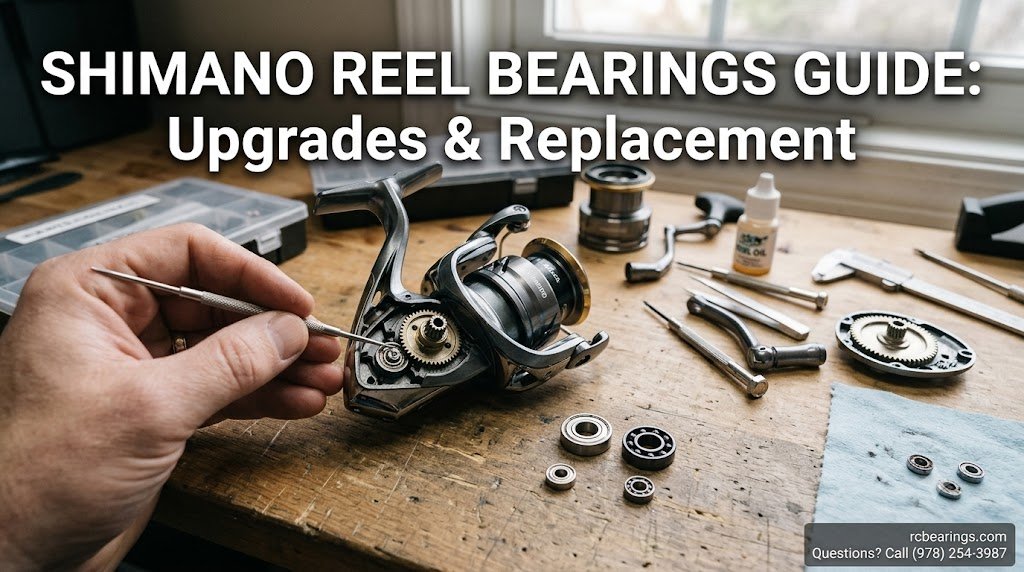
Shimano reel bearings are known for tight tolerances straight from the factory, which is part of why Shimano reels cast so smoothly when new. But like any precision component, those bearings wear down over time, and knowing how to source the right shimano replacement bearings keeps a good reel performing the way it was designed to.
Why Shimano Reels Rely So Heavily on Bearing Quality
Shimano builds much of its reel performance reputation around smooth, low-friction spool rotation, which depends almost entirely on bearing quality and precision fit. A worn or corroded bearing has an outsized effect on a Shimano reel specifically, since the rest of the reel’s engineering is built around expecting that level of smoothness — a rough bearing stands out more on a Shimano than it might on a budget reel with looser tolerances everywhere else.
Common Bearing Locations on Shimano Reels
- Spool bearings — control casting distance and free-spool feel
- Pinion gear bearings — support the gear that drives the spool during retrieve
- Handle shaft bearings — affect retrieve smoothness under load
- Line roller bearings — reduce line twist on spinning reel models
Each location may use a different bearing size, so identifying exactly which bearing needs replacing before ordering saves time and avoids mismatched parts.
Steel vs Ceramic Shimano Replacement Bearings
Standard steel shimano replacement bearings restore factory-level performance at a reasonable price point, which is the right call for most anglers doing routine maintenance. Anglers chasing maximum casting distance — surf casters, tournament anglers — often upgrade to ceramic or hybrid ceramic bearings in the spool position specifically, since that’s where reduced friction has the biggest impact on cast length.
How to Identify the Correct Shimano Bearing Size
Shimano doesn’t always print bearing dimensions directly on the part, so the most reliable method is measuring the old bearing’s bore, outer diameter, and width with a caliper before ordering a replacement. These measurements correspond to standard bearing sizing conventions set by the American Bearing Manufacturers Association, which makes cross-referencing available replacement options straightforward once you have accurate numbers.
Signs Shimano Reel Bearings Need Replacing
- Reduced casting distance compared to when the reel was newer
- A gritty or notchy feeling when spinning the spool by hand
- Increased backlash with the same casting technique that used to work cleanly
- Any grinding or whining sound during retrieve
Maintaining Shimano Bearings Between Replacements
Regular cleaning with a bearing-safe solvent, followed by light re-lubrication, extends the life of Shimano bearings considerably — especially for anglers fishing saltwater, where corrosion is the leading cause of premature bearing failure. Skipping this maintenance is one of the most common reasons anglers end up needing a full bearing replacement sooner than expected.
Ceramic Upgrades Across Shimano’s Reel Lineup
Ceramic bearing upgrades work across nearly all Shimano reel types — spinning, baitcasting, and conventional — though the performance benefit is most noticeable in reels used for distance casting or high-speed retrieve techniques. Anglers running Shimano reels for finesse fishing or shorter-range presentations may not notice as dramatic a difference, since casting distance matters less in those techniques than it does for surf casting or open-water presentations.
Final Thoughts
Shimano reels reward good bearing maintenance more than most, given how much of their performance depends on smooth rotation. If you’re not sure which bearing size or grade fits your specific Shimano model, send us the details and we’ll help confirm the right fit.
Shop Fishing Reel Bearings → [https://rcbearings.com/fishing-reel-kits/]
Questions about fitment? Call (978) 254-3987 — we’re happy to confirm before you buy.