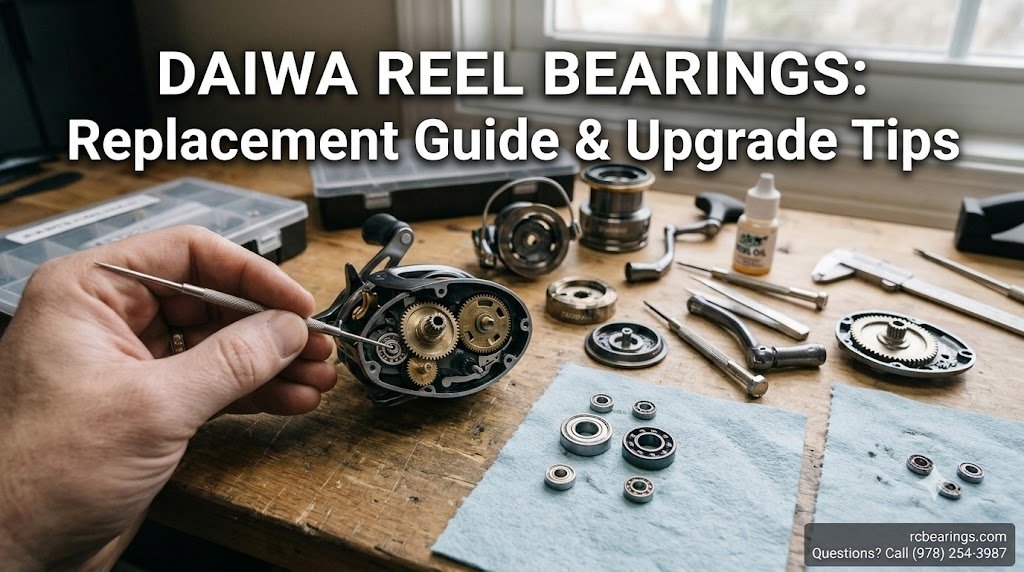
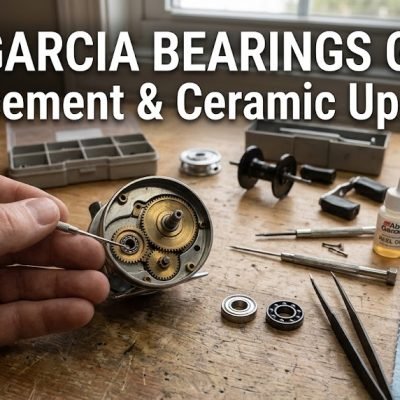
Daiwa reel bearings tend to hold up well for years, but eventually even a well-maintained reel needs a bearing refresh to keep casting the way it did when it was new. Whether you’re fixing a specific issue or doing preventive maintenance, knowing how to source the correct daiwa replacement bearings makes the job straightforward.
Where Bearings Are Used in a Daiwa Reel
Daiwa reels distribute bearings across several key points — the spool, the pinion gear, the handle shaft, and on spinning models, the line roller. Each of these positions plays a different role in how the reel feels during casting and retrieve, and a worn bearing in one spot doesn’t necessarily mean the others need replacing too. Isolating which bearing is actually causing a problem before ordering parts saves both time and money.
Steel vs Ceramic Daiwa Replacement Bearings
Standard steel replacement bearings bring a Daiwa reel back to factory spec reliably and affordably, which covers the needs of most anglers doing routine maintenance. For anglers looking to push casting distance beyond factory performance, ceramic or hybrid ceramic bearings in the spool position reduce friction further, translating into a smoother initial spool acceleration and longer casts overall.
How to Measure for the Correct Daiwa Bearing Size
Daiwa reel bearings vary by model and generation, so the most reliable way to find the correct replacement is measuring the old bearing’s bore, outer diameter, and width directly with a caliper rather than relying solely on the reel’s model number. These measurements align with standard sizing conventions established by the American Bearing Manufacturers Association, which makes it easier to confirm an exact match across different bearing suppliers.
Signs Your Daiwa Reel Needs New Bearings
- Casting distance that’s noticeably shorter than when the reel was newer
- A gritty, rough feeling when spinning the spool by hand
- Increased backlash despite unchanged casting technique
- A grinding or whining noise during the retrieve
- Visible corrosion on bearing shields after saltwater exposure
Saltwater Maintenance for Daiwa Bearings
Daiwa reels used in saltwater need more frequent bearing attention than freshwater-only reels, since saltwater corrosion works faster than most anglers expect, even on reels marketed as saltwater-rated. Rinsing the reel after each saltwater session and periodically pulling the spool for a bearing inspection catches corrosion early, before it turns into a full bearing failure mid-cast.
When to Consider a Full Bearing Kit Instead
If a Daiwa reel has seen several seasons of regular use, it’s common for more than one bearing to be nearing the end of its service life even if only one is causing an obvious symptom. In that case, replacing the full set of daiwa reel bearings at once — rather than one at a time as each fails — often saves money and avoids repeatedly reopening the reel for separate repairs down the line.
Freshwater vs Saltwater Daiwa Bearing Needs
Freshwater-only Daiwa reels can often run standard steel bearings for years without corrosion issues, while reels used interchangeably between fresh and saltwater benefit from at least a stainless upgrade to handle occasional salt exposure without requiring constant vigilance about rinsing and drying after every trip.
Final Thoughts
A Daiwa reel that’s starting to feel sluggish or is casting shorter than it used to is usually a bearing problem, not a reel problem — and it’s typically one of the more affordable fixes available for restoring reel performance. If you’re not sure which bearing size or grade fits your specific Daiwa model, send us the details and we’ll help confirm the right fit before you order.
Shop Fishing Reel Bearings → [https://rcbearings.com/fishing-reel-kits/]
Questions about fitment? Call (978) 254-3987 — we’re happy to confirm before you buy.