A single bicycle bearing does a lot of work — every rotating point on a bike relies on bearings to keep things spinning smoothly under constant load, vibration, and weather exposure. Knowing where bearings live on a bike and how to size them correctly makes maintenance a lot less intimidating.
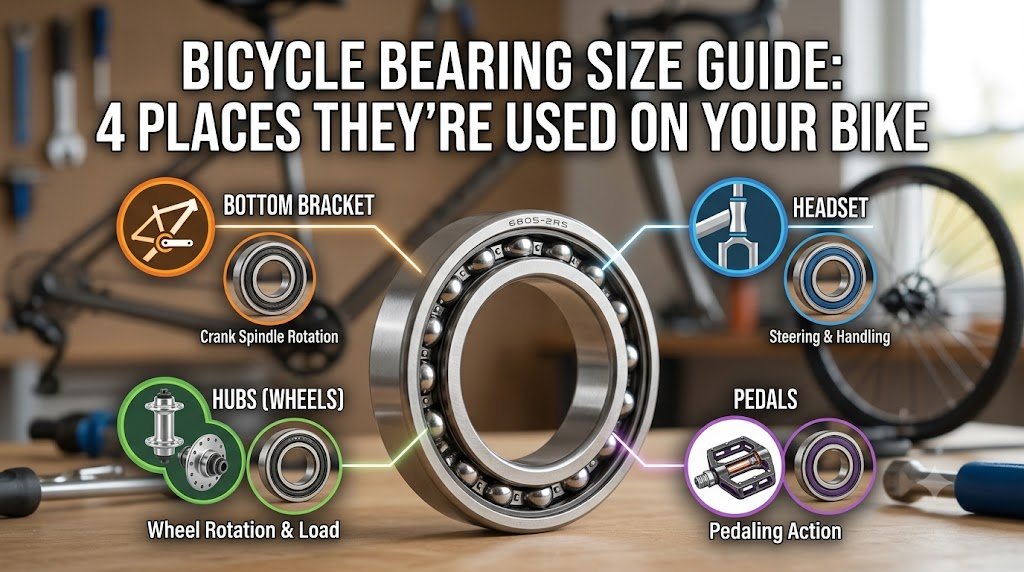
4 Places Bearings Are Used on a Bicycle
- Wheel hubs — support radial load from the rider’s weight and rolling resistance
- Bottom bracket — supports the crankset and handles pedaling force
- Headset — allows the fork to steer smoothly while supporting front-end load
- Pedals — smaller bearings supporting rotational load at the pedal spindle
Each location uses different bike bearing sizes depending on the bike’s design, manufacturer, and age, which is why bearings from one part of the bike are almost never interchangeable with another.
Common Bike Bearing Sizes
Bicycle bearings are typically sealed cartridge bearings sized to fit standardized hub, bottom bracket, and headset dimensions. Common sizes include small cartridge bearings for hubs and headsets, and slightly larger sizes for bottom brackets, depending on whether the frame uses a threaded or press-fit bottom bracket standard. Because there’s meaningful variation between bike brands and bottom bracket standards, matching your specific bike’s existing bearing dimensions is more reliable than assuming based on bike type alone. These dimensional conventions generally align with tolerance classes set by the American Bearing Manufacturers Association.
Sealed vs Loose Ball Bearings
Older and budget bikes sometimes still use loose ball bearings held in a retainer, requiring grease and periodic adjustment. Most modern bikes use sealed cartridge bearings instead — a self-contained unit that’s simpler to replace and holds up better against dirt and water intrusion, since the loose-ball design has more exposure points for contamination to enter.
Signs a Bicycle Bearing Needs Replacing
- Play or wobble in the wheel, crank, or headset when checked by hand
- Gritty or rough feeling when spinning the wheel, crank, or handlebars
- A creaking or clicking noise while pedaling that disappears when coasting
- Noticeably increased rolling resistance compared to when the bike was new
How Riding Conditions Affect Bearing Life
Bikes ridden in rain, mud, or on gravel wear through bearings faster than bikes kept to dry pavement, since water and grit work their way past seals over time even on well-sealed cartridge bearings. Riders in wetter climates should plan on checking hub and bottom bracket bearings more frequently than the general maintenance interval suggests.
DIY Replacement vs Shop Service
Hub and headset bearings on bikes with standard sizes are often replaceable at home with basic tools, while press-fit bottom brackets sometimes require a specific bearing press tool that many home mechanics don’t have on hand. If you’re not confident identifying the correct bearing standard for your bottom bracket, a local shop can usually confirm it quickly, but sourcing the actual replacement part yourself is often more affordable than a shop-supplied bearing.
Final Thoughts
Bicycle bearings take a lot of abuse for how little attention they get — road grit, rain, and constant load all add up over time. If you’re replacing a hub, bottom bracket, or headset bearing and aren’t sure which size fits your bike, send us the details and we’ll help confirm the correct part. Whether you’re maintaining a daily commuter or a race bike, matching the correct bearing size and seal type keeps your bike rolling smoothly for years rather than requiring frequent repeat repairs.
Shop Bicycle Bearings → [https://rcbearings.com/shop-list-view/]
Questions about fitment? Call (978) 254-3987 — we’re happy to help.