The question we hear most often about a ceramic ball bearing is simple: is it actually worth the extra cost over steel? The honest answer is — it depends on what you’re using it for. Ceramic bearings genuinely outperform steel in specific conditions, but they’re not automatically the better choice for every application.
What Is a Ceramic Ball Bearing?
A true ceramic bearing uses balls (and sometimes races) made from silicon nitride instead of steel. A bearing ceramic ball is significantly harder, lighter, and smoother than a steel ball of the same size, which changes how the bearing performs under speed, heat, and load.
Are Ceramic Bearings Better Than Steel? Where Ceramic Wins
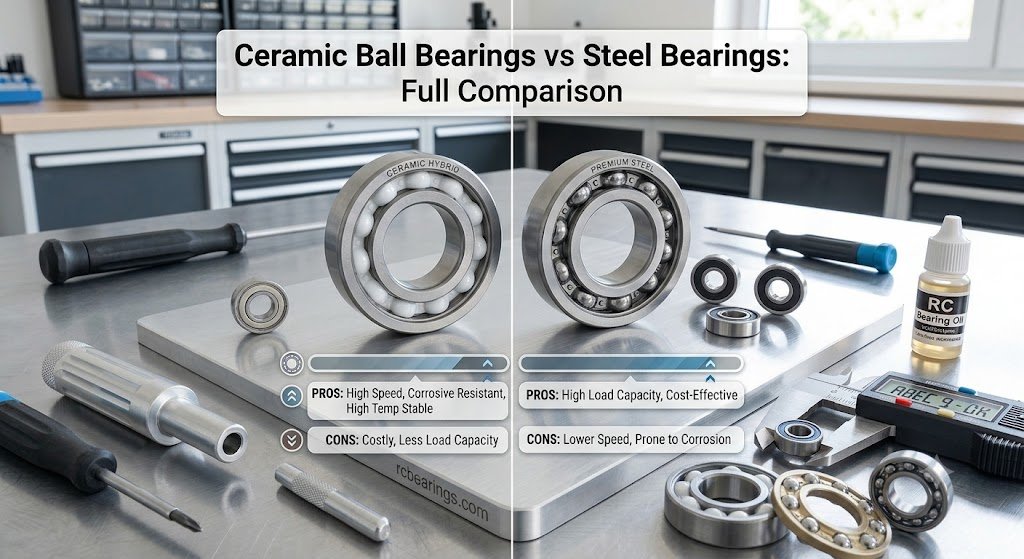
- Higher RPM capability — ceramic balls generate less friction and heat at high speed, making them ideal for high-RPM applications like RC motors, turbines, and racing wheels.
- Lighter weight — ceramic is significantly lighter than steel, which reduces rotational mass in performance applications like skateboard or inline skate wheels.
- Corrosion resistance — ceramic doesn’t rust, making it a strong choice for marine or wash-down environments.
- Longer lifespan under heat — ceramic handles sustained heat better than standard steel, which matters in high-temperature bearings applications.
Where Steel Still Makes Sense
- Cost — full ceramic bearings cost significantly more than steel, and for casual or low-speed use, the performance gap won’t justify the price.
- Shock loading — steel handles sudden impact loads slightly better than ceramic in some applications, since ceramic is harder but more brittle under shock.
- General-purpose use — for everyday applications without extreme speed or heat demands, a quality steel bearing performs perfectly well.
A Middle Ground: Hybrid Ceramic Bearings
For anyone who wants some of ceramic’s benefits without the full cost, hybrid ceramic bearings use ceramic balls with steel races — offering reduced friction and weight at a lower price point than full ceramic. We cover hybrid ceramic bearings in more detail in a separate guide if you want the full breakdown.
So, Is Ceramic Bearing Worth It?
For high-speed, high-heat, or corrosion-prone applications — RC racing, turbines, marine equipment — a ceramic ball bearing is usually worth the investment. For everyday, lower-speed use, a quality steel bearing will perform reliably at a fraction of the cost.
Final Thoughts
Neither material is universally “better” — the right choice depends on your speed, load, and environment. If you’re not sure which is the right fit for your specific application, reach out and we’ll help you choose based on how the bearing will actually be used.
Shop Ceramic & Steel Bearings → [https://rcbearings.com/shop-list-view/]
Questions about ceramic vs steel for your build? Call (978) 254-3987 — we’re happy to help.