Whether you’re rolling on quads or inlines, inline skate bearings are one of the most overlooked parts of the setup — and one of the first things worth checking when a pair of skates that used to glide starts feeling sluggish. This guide covers sizing, bearing grades, and exactly when to replace them.
Standard Bearing Size for Inline and Roller Skates
Most inline and quad roller skate wheels use the same standard 608 bearing size: 8mm bore, 22mm outer diameter, 7mm width. This is consistent across the vast majority of skate brands, which means bearings roller skates riders need are usually interchangeable regardless of the specific skate model. These sizing conventions follow tolerance classifications established by the American Bearing Manufacturers Association, the same body responsible for ABEC precision ratings.
Choosing the Right Bearing Grade
- Standard steel bearings are a reliable, affordable choice for recreational and casual skating
- ABEC-rated bearings (ABEC 7 or ABEC 9) offer tighter manufacturing tolerances for smoother rolling at speed
- Ceramic or hybrid ceramic bearings reduce friction further and resist corrosion better, which matters for skaters who ride outdoors in varying weather
Speed skaters and roller derby athletes tend to prioritize higher precision bearings, since even small reductions in friction add up over a race or long session. Recreational and fitness skaters generally do fine with quality standard bearings and don’t need to spend extra on ceramic upgrades.
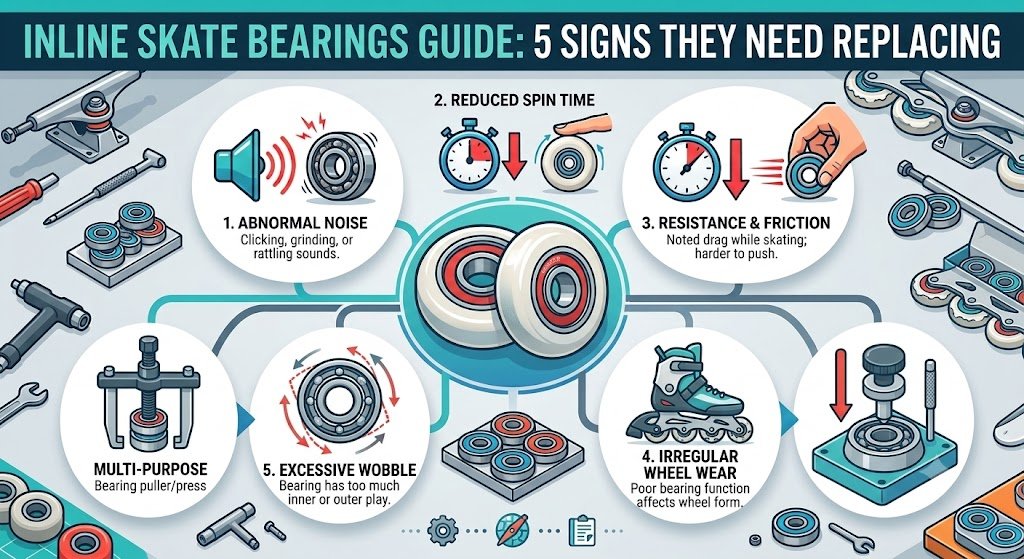
5 Signs Your Skate Bearings Need Replacing
- Wheels feel like they’re dragging or slowing down faster than usual
- A gritty or grinding feeling when spinning the wheel by hand
- Visible rust, especially after skating in wet or humid conditions
- Skates that used to roll smoothly now require noticeably more push effort
- Uneven wheel spin, where one wheel clearly rolls longer than the others after a push
If several of these apply at once, it’s almost always the bearings rather than the wheels themselves causing the slowdown.
Maintaining Inline Skate Bearings
Bearings on inline and roller skates are exposed to dirt, debris, and moisture every session. Popping the wheels off periodically to clean and re-lubricate the bearings extends their life considerably. A light bearing-specific lubricant works better than heavy grease, since heavy grease can actually slow the bearing down rather than protect it. Bearings that stay noisy or rough after cleaning have usually reached the end of their service life and are worth replacing rather than continuing to service them.
Indoor vs Outdoor Skating and Bearing Wear
Indoor rink skating is far gentler on bearings than outdoor skating, since there’s no grit, water, or debris being pulled into the bearing shield. Skaters who ride outdoors regularly should expect to clean or replace bearings more often than indoor-only skaters, and sealed (2RS) bearings tend to hold up better outdoors than open or shielded (ZZ) designs.
How Weather Affects Skate Bearing Performance
Cold weather thickens standard bearing grease, which can make wheels feel sluggish until they warm up from friction during the first few minutes of skating. In hot, dry climates, bearings tend to run drier and pick up more dust, so more frequent cleaning is usually needed compared to milder conditions. Skaters who ride year-round in variable climates often keep two sets of bearings on hand — one cleaned and ready to swap in when the other needs servicing — to avoid downtime.
Final Thoughts
Fresh, correctly sized bearings make a bigger difference in how a pair of skates rolls than most riders expect. If you’re not sure which grade or material fits your skating style, reach out and we’ll help you choose.
Shop Inline & Roller Skate Bearings → [https://rcbearings.com/shop-list-view/]
Questions about fitment? Call (978) 254-3987 — we’re happy to help.